
Posted on 12/7/2025 14:00 PM (CNA Daily News)
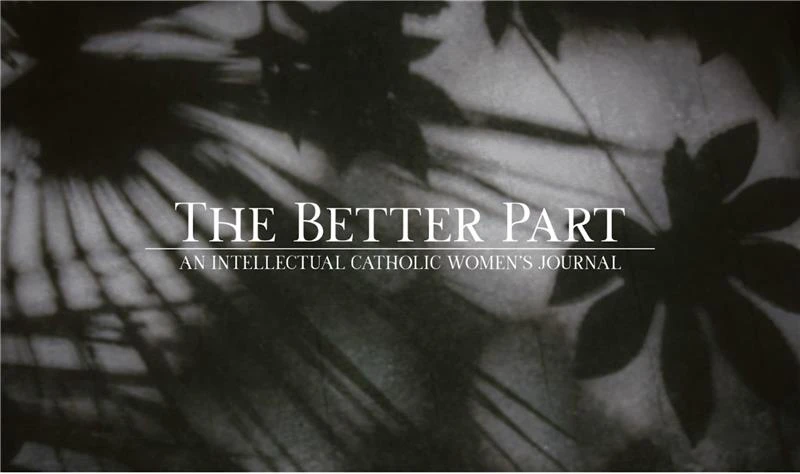 Promo photo for the The Better Part Journal of shadows of Madonna lilies for the Blessed Virgin Mary. / Credit: Photo courtesy of Heidi Bollich-Erne
Washington, D.C. Newsroom, Dec 7, 2025 / 09:00 am (CNA).
While teaching an ethics and culture course, Heidi Bollich-Erne was looking for a journal featuring the work of Catholic women for her students to read. After being told that it simply didn’t exist, she decided to create one herself.
With the help of a team of women, Bollich-Erne has founded what she calls the “first intellectual Catholic women’s journal.” Its purpose is to not only define the feminine genius but also to show how faithful women can embody its beauty in their daily lives.
“I want women to find a home, a place that values their work. The journal itself is edited, written, and published solely by Catholic women,” Bollich-Erne told CNA. “The way that women write, the way that we express ourselves is very different. That’s just who we are. That’s part of the genius of women.”
The Better Part Journal is intended to give women of the Church “hope” by discussing issues that are relevant to them. The first edition of the journal will be released in April 2026.
Before starting the journal, Bollich-Erne studied theology at the University of St. Thomas, where she “fell in love with philosophy.” She went to the Center for Thomistic Studies for her master’s degree in Thomistic philosophy but took a break from her doctorate and started teaching.
She is now based in Texas where she has taught high school, college preparation, college, and adults. While teaching, she tried to find content to help guide discussion on gender complementarity but couldn’t find much written by Catholic women.
“I thought, ‘I want to read more intellectual women,’ but it was a struggle… So I found a friend who works at a university and I said: ‘Can you recommend … an intellectual Catholic women’s magazine? She got back to me a few days later and said, ‘It doesn’t exist.’”
Bollich-Erne started The Better Part Journal by first launching a company called JBG Publishings as “a home” for the journal. She wanted to ensure the publication would not be independently published but be part of a company that would help it to grow.
Bollich-Erne named the company with the initials of her father, who passed away a few years prior. His passing “was a realization that ‘life is too short,’” Bollich-Erne said. “I need to love what I do; I need to really work to find meaning.’”

“The purpose of the journal is to bring together the voices of intellectual Catholic women who are faithful to the magisterium,” Bollich-Erne said. “I want voices of all backgrounds. I want women of all areas of discipline. I want academics. I want nonacademics. I want all women contributing to this conversation.”
“We all throw around the ‘feminine genius,’ but when you ask someone to stop and give an actual definition, most people can’t,” Bollich-Erne said. Most people define it with a quote by St. John Paul II who coined the term in his apostolic letter Mulieris Dignitatem to describe the unique gifts and qualities women possess, but, she said, “that’s a quote, not a definition.”
“There’s a lot of work that needs to be done in this area, and I know there’s room for it to be done on a theological, philosophical level. So the idea was that we would … define the feminine genius and then show it. Live it. It’s not a theology journal and it’s not a philosophy journal. It’s truly interdisciplinary.”
The first issue of the journal is called “Uncharted” and will tackle a number of topics.
“As soon as women realized that I was serious about truly hearing their voices and not editing them out or telling them what they can and can’t write about, they gave us some really amazing work. I’ve just been blown away. I’m only so creative, but I have a great team.”
The journal will feature articles covering neuroscience and theology and apply it to Mary and the Incarnation. It will have columns by doctors and scientists to look at “faith in the formula” and “applying science to religion.”
There will be discussion of issues women face including body image, infertility, and violence. Articles will explore “the psychology of fairy tales and what that does to young girls growing up, whether that be positive or negative,” Bollich-Erne said. It will look into “what we are exposed to …from the media and what it does to us.”
“The beauty behind the journal has been the women that have come forth to lend their voices,” Bollich-Erne said. “It’s been really amazing to see how excited they are about freedom of voice. It’s been something I wasn’t expecting.”
Despite a shift in media from print to online formats, The Better Part Journal will only be released in print copies because, Bollich-Erne said, “I want it to be lasting.”
“I am a tactile person. I like to hold a book. I wanted it to be something that is kept. So obviously that’s print,” Bollich-Erne said. “But then if you want to keep it has to be high quality.”
The journal will use original photographs and crafted artwork to accompany the written works.
“It is stunning. It looks like a book,” Bollich-Erne said. “The idea is that you read it, you keep it, and you put it on your bookshelf and you never get rid of it because the topics are lasting.”
For an article to be included, it has to be “something that I think women will find valuable, whether you’re an academic or a high school student,” Bollich-Erne said. “It has to be something that all women find valuable, or we cannot print it.”
“Many women have said they’re excited to hold their work and see it in print as opposed to scrolling past the work. There’s nothing wrong with online formats; it gives voices to a lot of people, but this is just different.”
“I had an author tell me, ‘I don’t write anymore for anyone,’ because, she said, ‘I am so tired of my work just disappearing. It’s online for a week. I spent all this work, all this time, and it was something substantial that I really cared about, and it’s just gone.’”
“She signed up with us for a column specifically because we are in print. The idea is that this work is kept forever.”
The print journals will be published twice a year only, because “I want it to be something that takes a while to digest,” Bollich-Erne said. “Beautiful things take time.”
JGB Publishings has “goals to expand substantially over the next five to 10 years,” Bollich-Erne said. The company will “take care of” the journal to ensure its message can “grow and expand.”
“To be able, as women in the Church, to truly have a serious conversation about all of these things … we are going to forge our future,” Bollich-Erne said. “We’re going to step forward in hope and show the world this is what an intelligent Catholic woman looks like.”
“We’re not stifled. We’re not sad. We’re not miserable people. We are happy. We are excited about life, and we are treated with respect. We are loved and we love who we are,” Bollich-Erne said. “I want people, especially women, of all ages to see that and to understand that.”
Posted on 12/7/2025 14:00 PM (CNA Daily News - Vatican)
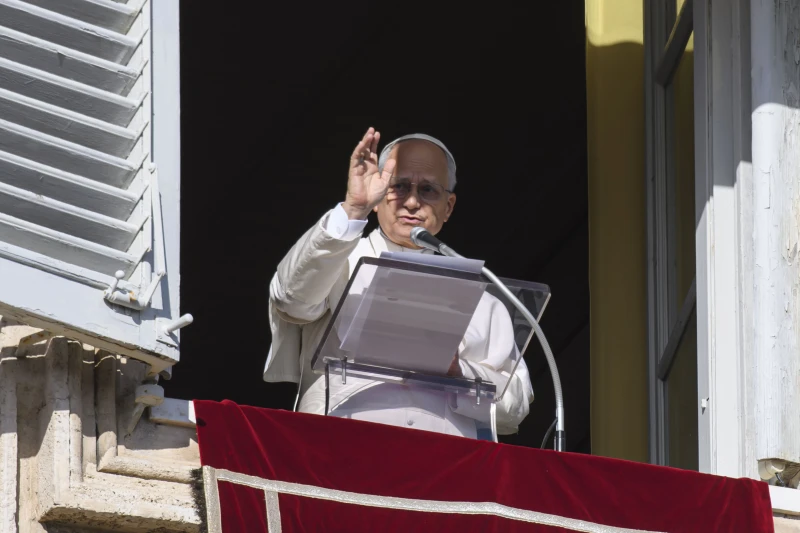 Pope Leo XIV addresses pilgrims gathered in St. Peter's Square at the Vatican for the Angelus on December 7, 2025. / Vatican Media
Vatican City, Dec 7, 2025 / 09:00 am (CNA).
Pope Leo XIV on Sunday said his apostolic journey to Turkey and Lebanon showed that “peace is possible,” pointing to renewed steps toward Christian unity and powerful encounters with the Lebanese people still seeking justice after the 2020 Beirut port explosion.
Speaking after the Angelus to pilgrims gathered in St Peter’s Square on Dec. 7, the pope recalled praying in İznik, ancient Nicea, with Ecumenical Patriarch Bartholomew, considered first among equals among Eastern Orthodox bishops, and representatives of other Christian communities on the 1700th anniversary of the First Council of Nicaea.
Marking Sunday’s 60th anniversary of the Common Declaration between Pope Paul VI and Patriarch Athenagoras, Leo said, “We give thanks to God and renew our dedication to journeying towards the full visible unity of all Christians.”
In Lebanon, the pope said he encountered a “mosaic of coexistence” and met people who serve the most vulnerable by welcoming refugees, visiting the imprisoned, and sharing food with those in need. He was especially moved by meeting relatives of the victims of the Beirut port blast. “The Lebanese people were waiting for a word and a presence of consolation, but it was they who comforted me with their faith and their enthusiasm,” he said.
The pope also expressed closeness to communities in South and Southeast Asia struck by recent natural disasters, praying for victims and urging international solidarity.
Earlier, in his Advent catechesis before the Angelus, Pope Leo reflected on John the Baptist’s call to prepare the way of the Lord. John’s severe tone, he said, still resonates because it carries God’s “plea to take life seriously” and to ready the heart for the God who judges “not by appearance, but by deeds and intentions.”
The pope said the Kingdom manifests itself gently, in the meekness and mercy of Christ described by Isaiah as a shoot rising from a seemingly dead tree trunk. He linked this surprising newness to the spirit of the Second Vatican Council, which closed 60 years ago and continues to guide the Church on its journey toward unity and renewal.
“This is the spirituality of Advent, very luminous and concrete,” he said. “The streetlights remind us that each of us can be a little light, if we welcome Jesus, the shoot of a new world.”
Posted on 12/7/2025 14:00 PM (CNA Daily News - US)
Promo photo for the The Better Part Journal of shadows of Madonna lilies for the Blessed Virgin Mary. / Credit: Photo courtesy of Heidi Bollich-Erne
Washington, D.C. Newsroom, Dec 7, 2025 / 09:00 am (CNA).
While teaching an ethics and culture course, Heidi Bollich-Erne was looking for a journal featuring the work of Catholic women for her students to read. After being told that it simply didn’t exist, she decided to create one herself.
With the help of a team of women, Bollich-Erne has founded what she calls the “first intellectual Catholic women’s journal.” Its purpose is to not only define the feminine genius but also to show how faithful women can embody its beauty in their daily lives.
“I want women to find a home, a place that values their work. The journal itself is edited, written, and published solely by Catholic women,” Bollich-Erne told CNA. “The way that women write, the way that we express ourselves is very different. That’s just who we are. That’s part of the genius of women.”
The Better Part Journal is intended to give women of the Church “hope” by discussing issues that are relevant to them. The first edition of the journal will be released in April 2026.
Before starting the journal, Bollich-Erne studied theology at the University of St. Thomas, where she “fell in love with philosophy.” She went to the Center for Thomistic Studies for her master’s degree in Thomistic philosophy but took a break from her doctorate and started teaching.
She is now based in Texas where she has taught high school, college preparation, college, and adults. While teaching, she tried to find content to help guide discussion on gender complementarity but couldn’t find much written by Catholic women.
“I thought, ‘I want to read more intellectual women,’ but it was a struggle… So I found a friend who works at a university and I said: ‘Can you recommend … an intellectual Catholic women’s magazine? She got back to me a few days later and said, ‘It doesn’t exist.’”
Bollich-Erne started The Better Part Journal by first launching a company called JBG Publishings as “a home” for the journal. She wanted to ensure the publication would not be independently published but be part of a company that would help it to grow.
Bollich-Erne named the company with the initials of her father, who passed away a few years prior. His passing “was a realization that ‘life is too short,’” Bollich-Erne said. “I need to love what I do; I need to really work to find meaning.’”
“The purpose of the journal is to bring together the voices of intellectual Catholic women who are faithful to the magisterium,” Bollich-Erne said. “I want voices of all backgrounds. I want women of all areas of discipline. I want academics. I want nonacademics. I want all women contributing to this conversation.”
“We all throw around the ‘feminine genius,’ but when you ask someone to stop and give an actual definition, most people can’t,” Bollich-Erne said. Most people define it with a quote by St. John Paul II who coined the term in his apostolic letter Mulieris Dignitatem to describe the unique gifts and qualities women possess, but, she said, “that’s a quote, not a definition.”
“There’s a lot of work that needs to be done in this area, and I know there’s room for it to be done on a theological, philosophical level. So the idea was that we would … define the feminine genius and then show it. Live it. It’s not a theology journal and it’s not a philosophy journal. It’s truly interdisciplinary.”
The first issue of the journal is called “Uncharted” and will tackle a number of topics.
“As soon as women realized that I was serious about truly hearing their voices and not editing them out or telling them what they can and can’t write about, they gave us some really amazing work. I’ve just been blown away. I’m only so creative, but I have a great team.”
The journal will feature articles covering neuroscience and theology and apply it to Mary and the Incarnation. It will have columns by doctors and scientists to look at “faith in the formula” and “applying science to religion.”
There will be discussion of issues women face including body image, infertility, and violence. Articles will explore “the psychology of fairy tales and what that does to young girls growing up, whether that be positive or negative,” Bollich-Erne said. It will look into “what we are exposed to …from the media and what it does to us.”
“The beauty behind the journal has been the women that have come forth to lend their voices,” Bollich-Erne said. “It’s been really amazing to see how excited they are about freedom of voice. It’s been something I wasn’t expecting.”
Despite a shift in media from print to online formats, The Better Part Journal will only be released in print copies because, Bollich-Erne said, “I want it to be lasting.”
“I am a tactile person. I like to hold a book. I wanted it to be something that is kept. So obviously that’s print,” Bollich-Erne said. “But then if you want to keep it has to be high quality.”
The journal will use original photographs and crafted artwork to accompany the written works.
“It is stunning. It looks like a book,” Bollich-Erne said. “The idea is that you read it, you keep it, and you put it on your bookshelf and you never get rid of it because the topics are lasting.”
For an article to be included, it has to be “something that I think women will find valuable, whether you’re an academic or a high school student,” Bollich-Erne said. “It has to be something that all women find valuable, or we cannot print it.”
“Many women have said they’re excited to hold their work and see it in print as opposed to scrolling past the work. There’s nothing wrong with online formats; it gives voices to a lot of people, but this is just different.”
“I had an author tell me, ‘I don’t write anymore for anyone,’ because, she said, ‘I am so tired of my work just disappearing. It’s online for a week. I spent all this work, all this time, and it was something substantial that I really cared about, and it’s just gone.’”
“She signed up with us for a column specifically because we are in print. The idea is that this work is kept forever.”
The print journals will be published twice a year only, because “I want it to be something that takes a while to digest,” Bollich-Erne said. “Beautiful things take time.”
JGB Publishings has “goals to expand substantially over the next five to 10 years,” Bollich-Erne said. The company will “take care of” the journal to ensure its message can “grow and expand.”
“To be able, as women in the Church, to truly have a serious conversation about all of these things … we are going to forge our future,” Bollich-Erne said. “We’re going to step forward in hope and show the world this is what an intelligent Catholic woman looks like.”
“We’re not stifled. We’re not sad. We’re not miserable people. We are happy. We are excited about life, and we are treated with respect. We are loved and we love who we are,” Bollich-Erne said. “I want people, especially women, of all ages to see that and to understand that.”
Posted on 12/7/2025 14:00 PM (CNA Daily News)
Pope Leo XIV addresses pilgrims gathered in St. Peter's Square at the Vatican for the Angelus on December 7, 2025. / Vatican Media
Vatican City, Dec 7, 2025 / 09:00 am (CNA).
Pope Leo XIV on Sunday said his apostolic journey to Turkey and Lebanon showed that “peace is possible,” pointing to renewed steps toward Christian unity and powerful encounters with the Lebanese people still seeking justice after the 2020 Beirut port explosion.
Speaking after the Angelus to pilgrims gathered in St Peter’s Square on Dec. 7, the pope recalled praying in İznik, ancient Nicea, with Ecumenical Patriarch Bartholomew, considered first among equals among Eastern Orthodox bishops, and representatives of other Christian communities on the 1700th anniversary of the First Council of Nicaea.
Marking Sunday’s 60th anniversary of the Common Declaration between Pope Paul VI and Patriarch Athenagoras, Leo said, “We give thanks to God and renew our dedication to journeying towards the full visible unity of all Christians.”
In Lebanon, the pope said he encountered a “mosaic of coexistence” and met people who serve the most vulnerable by welcoming refugees, visiting the imprisoned, and sharing food with those in need. He was especially moved by meeting relatives of the victims of the Beirut port blast. “The Lebanese people were waiting for a word and a presence of consolation, but it was they who comforted me with their faith and their enthusiasm,” he said.
The pope also expressed closeness to communities in South and Southeast Asia struck by recent natural disasters, praying for victims and urging international solidarity.
Earlier, in his Advent catechesis before the Angelus, Pope Leo reflected on John the Baptist’s call to prepare the way of the Lord. John’s severe tone, he said, still resonates because it carries God’s “plea to take life seriously” and to ready the heart for the God who judges “not by appearance, but by deeds and intentions.”
The pope said the Kingdom manifests itself gently, in the meekness and mercy of Christ described by Isaiah as a shoot rising from a seemingly dead tree trunk. He linked this surprising newness to the spirit of the Second Vatican Council, which closed 60 years ago and continues to guide the Church on its journey toward unity and renewal.
“This is the spirituality of Advent, very luminous and concrete,” he said. “The streetlights remind us that each of us can be a little light, if we welcome Jesus, the shoot of a new world.”
Posted on 12/7/2025 13:00 PM (CNA Daily News - Vatican)
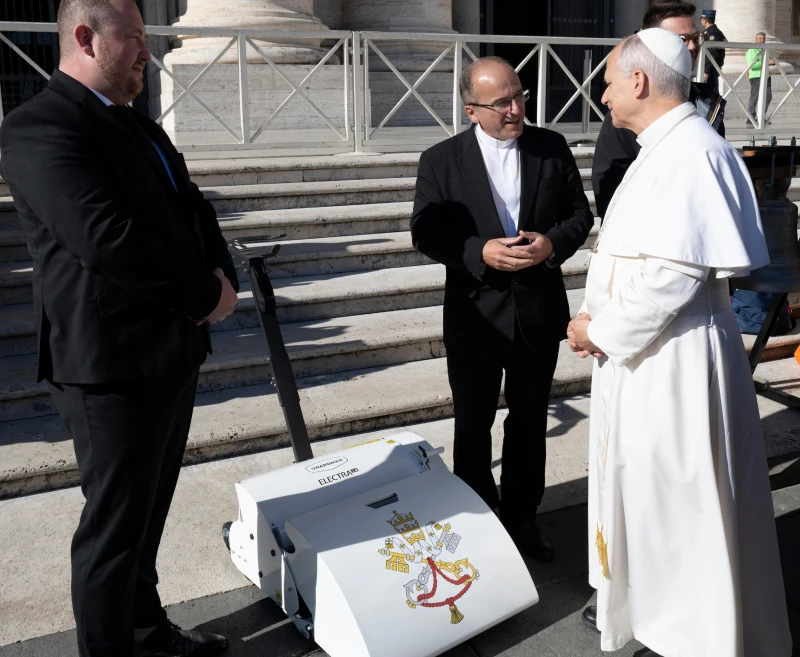 Pope Leo XIV receives an electric lawn mower from Czech manufacturer Swardman during a general audience in mid-November 2025. / Credit: Photo courtesy of Swardman
Rome Newsroom, Dec 7, 2025 / 08:00 am (CNA).
The Vatican’s gardeners have a new tool for maintaining the papal grounds: a custom-designed electric lawn mower bearing the Holy See’s coat of arms.
Pope Leo XIV received the white Electra 2.0 mower during a general audience in mid-November, a gift from Czech manufacturer Swardman.
The specially commissioned model features leather-lined handles and was hand-assembled at the company’s facility in Šardice, Czech Republic. “It was an incredibly powerful experience full of humility and respect,” Jakub Dvořák, the company’s sales manager who personally presented the gift, told CNA. “The pontiff appreciated the Vatican’s coat of arms placed on the appliance, listened with interest as we explained how it functions, and thanked us very politely.”
The quiet, precision-cutting mower is destined for use in the Vatican Gardens or possibly at the papal summer residence in Castel Gandolfo, according to a press release from the Czech Ministry of Foreign Affairs, which facilitated the presentation.
Founded in 2013, the company manufactures lawn care equipment that it describes as combining functionality with “timeless elegance” suited to historic settings. The Czech Embassy to the Holy See played a key role in arranging the gift, which Dvořák called “a moment of unmistakable magic.”
Vatican gardeners will put the electric mower to work maintaining the manicured lawns that provide green respite within the world’s smallest state.
Posted on 12/7/2025 13:00 PM (CNA Daily News)
Pope Leo XIV receives an electric lawn mower from Czech manufacturer Swardman during a general audience in mid-November 2025. / Credit: Photo courtesy of Swardman
Rome Newsroom, Dec 7, 2025 / 08:00 am (CNA).
The Vatican’s gardeners have a new tool for maintaining the papal grounds: a custom-designed electric lawn mower bearing the Holy See’s coat of arms.
Pope Leo XIV received the white Electra 2.0 mower during a general audience in mid-November, a gift from Czech manufacturer Swardman.
The specially commissioned model features leather-lined handles and was hand-assembled at the company’s facility in Šardice, Czech Republic. “It was an incredibly powerful experience full of humility and respect,” Jakub Dvořák, the company’s sales manager who personally presented the gift, told CNA. “The pontiff appreciated the Vatican’s coat of arms placed on the appliance, listened with interest as we explained how it functions, and thanked us very politely.”
The quiet, precision-cutting mower is destined for use in the Vatican Gardens or possibly at the papal summer residence in Castel Gandolfo, according to a press release from the Czech Ministry of Foreign Affairs, which facilitated the presentation.
Founded in 2013, the company manufactures lawn care equipment that it describes as combining functionality with “timeless elegance” suited to historic settings. The Czech Embassy to the Holy See played a key role in arranging the gift, which Dvořák called “a moment of unmistakable magic.”
Vatican gardeners will put the electric mower to work maintaining the manicured lawns that provide green respite within the world’s smallest state.
Posted on 12/7/2025 12:00 PM (CNA Daily News - US)
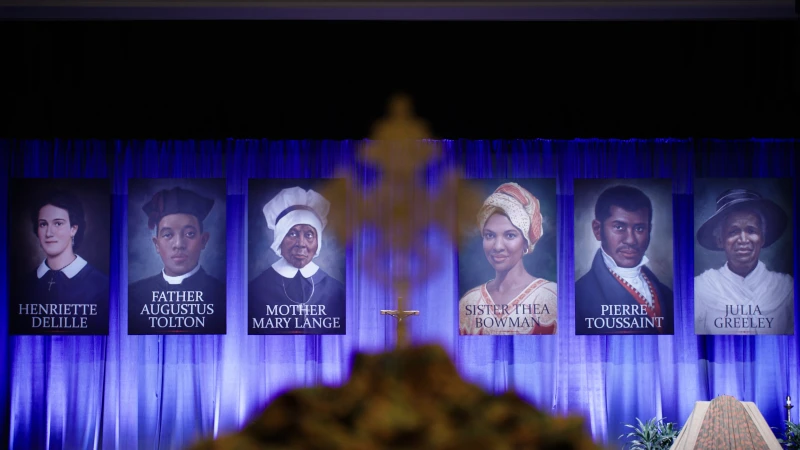 A still from “Trailblazers of Faith: The Legacy of African American Catholics,” which tells the inspiring story of how African Americans found a home in Catholicism without abandoning their identity or culture. Those pictured are the African Americans currently on the path to sainthood: Venerable Henriette DeLille, Julia Greeley, Father Augustus Tolton, Mother Mary Lange, Pierre Toussaint, and Sister Thea Bowman. / Credit: Black and Indian Mission Office
CNA Staff, Dec 7, 2025 / 07:00 am (CNA).
The Black and Indian Mission Office in Washington, D.C., recently released two documentaries — one highlighting African American Catholics on the path to sainthood and the focusing on Native American Catholic communities in the United States.
“Trailblazers of Faith: The Legacy of African American Catholics” tells the inspiring story of how African Americans found a home in Catholicism without abandoning their identity or culture.
From the pioneering Oblate Sisters of Providence and St. Frances Academy to the lives of Venerable Henriette DeLille, Julia Greeley, Father Augustus Tolton, and Sister Thea Bowman, the documentary celebrates a legacy of leadership and faith.
The second film, “Walking the Sacred Path: The Story of the Black and Indian Mission Office,” uncovers the often-hidden story of Native American Catholics in the United States. The film explores the powerful intersection of faith and culture — where the beauty of Native traditions and the universality of Catholicism meet — and highlights more than 140 years of the Black and Indian Mission Office’s mission to walk alongside Native American communities.
Father Maurice Henry Sands is the executive director of the Black and Indian Mission Office. He told CNA in an interview that these documentaries were created “to educate people about these two groups of people that a lot of people don’t know much about,” as well as “to educate people about the work that our office is doing with these two groups of people.”
The Black and Indian Mission Collection was the first national collection established at the Third Plenary Council of Baltimore in 1884 and is still taken up yearly funding the Black and Indian Mission Office.
The United States bishops recognized the need to support missionary work among African American and Native American Catholics and since its creation the collection has allowed for grants to be given to dioceses across the country to operate schools, parishes, and other missionary services that build the body of Christ in Native American, Alaska Native, and Black Catholic communities.
Sands shared that it is important for Catholics to walk alongside these communities because “we are all part of the human race that the Lord directs his work of salvation towards.”
“It’s important that we learn how to live together and walk together because as human beings we do put up walls and barriers and we see differences among ourselves,” he said, adding that racism “has caused a lot of difficulties for the two groups of people.”
“So, we have a fundamental call as disciples of Christ, as Catholics, as Christians, to help the Lord and his work of salvation to love one another and to have a special concern for those of our brothers and sisters who are disadvantaged and in need,” he said.
Speaking specifically to the documentary on the African American Catholics on their way to sainthood, Sands explained that the six individuals included all serve as great role models for the faithful because “each of them had very challenging beginnings but went on to be great lovers of Our Lord and were a great witness to others and helped people in need as they saw the needs of people around them and were very effective in doing that.”
He added that the early Church missionaries who served Native Americans also serve as role models in how to “help people where they are to come to know Christ, to love him, and to have a relationship with him.”
Sands said he hopes viewers will feel moved to “learn more about how they can support the ministry to these two groups of people and to learn more about how they can support the work that we are doing in our office.”
Both documentaries can be viewed on Formed.
Posted on 12/7/2025 12:00 PM (CNA Daily News)
A still from “Trailblazers of Faith: The Legacy of African American Catholics,” which tells the inspiring story of how African Americans found a home in Catholicism without abandoning their identity or culture. Those pictured are the African Americans currently on the path to sainthood: Venerable Henriette DeLille, Julia Greeley, Father Augustus Tolton, Mother Mary Lange, Pierre Toussaint, and Sister Thea Bowman. / Credit: Black and Indian Mission Office
CNA Staff, Dec 7, 2025 / 07:00 am (CNA).
The Black and Indian Mission Office in Washington, D.C., recently released two documentaries — one highlighting African American Catholics on the path to sainthood and the focusing on Native American Catholic communities in the United States.
“Trailblazers of Faith: The Legacy of African American Catholics” tells the inspiring story of how African Americans found a home in Catholicism without abandoning their identity or culture.
From the pioneering Oblate Sisters of Providence and St. Frances Academy to the lives of Venerable Henriette DeLille, Julia Greeley, Father Augustus Tolton, and Sister Thea Bowman, the documentary celebrates a legacy of leadership and faith.
The second film, “Walking the Sacred Path: The Story of the Black and Indian Mission Office,” uncovers the often-hidden story of Native American Catholics in the United States. The film explores the powerful intersection of faith and culture — where the beauty of Native traditions and the universality of Catholicism meet — and highlights more than 140 years of the Black and Indian Mission Office’s mission to walk alongside Native American communities.
Father Maurice Henry Sands is the executive director of the Black and Indian Mission Office. He told CNA in an interview that these documentaries were created “to educate people about these two groups of people that a lot of people don’t know much about,” as well as “to educate people about the work that our office is doing with these two groups of people.”
The Black and Indian Mission Collection was the first national collection established at the Third Plenary Council of Baltimore in 1884 and is still taken up yearly funding the Black and Indian Mission Office.
The United States bishops recognized the need to support missionary work among African American and Native American Catholics and since its creation the collection has allowed for grants to be given to dioceses across the country to operate schools, parishes, and other missionary services that build the body of Christ in Native American, Alaska Native, and Black Catholic communities.
Sands shared that it is important for Catholics to walk alongside these communities because “we are all part of the human race that the Lord directs his work of salvation towards.”
“It’s important that we learn how to live together and walk together because as human beings we do put up walls and barriers and we see differences among ourselves,” he said, adding that racism “has caused a lot of difficulties for the two groups of people.”
“So, we have a fundamental call as disciples of Christ, as Catholics, as Christians, to help the Lord and his work of salvation to love one another and to have a special concern for those of our brothers and sisters who are disadvantaged and in need,” he said.
Speaking specifically to the documentary on the African American Catholics on their way to sainthood, Sands explained that the six individuals included all serve as great role models for the faithful because “each of them had very challenging beginnings but went on to be great lovers of Our Lord and were a great witness to others and helped people in need as they saw the needs of people around them and were very effective in doing that.”
He added that the early Church missionaries who served Native Americans also serve as role models in how to “help people where they are to come to know Christ, to love him, and to have a relationship with him.”
Sands said he hopes viewers will feel moved to “learn more about how they can support the ministry to these two groups of people and to learn more about how they can support the work that we are doing in our office.”
Both documentaries can be viewed on Formed.
Posted on 12/7/2025 11:00 AM (CNA Daily News - US)
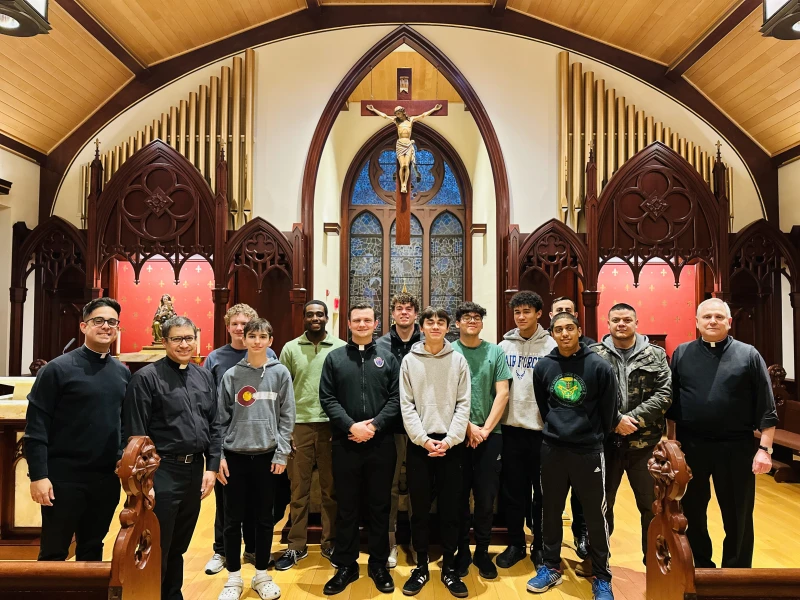 The “Sons of Thunder” vocations club at St. Bartholomew Church in Scotch Plains, New Jersey. / Credit: Photo courtesy of Father Matthew Gonzalez
CNA Staff, Dec 7, 2025 / 06:00 am (CNA).
A little over a year ago, Father Matthew Gonzalez, a priest in the Archdiocese of Newark, New Jersey, had the idea to create a group for boys in grades eight to 12 that focuses on vocations and what it means to be a Catholic man in today’s world.
“The Lord has placed a strong desire for vocations on my heart. I am convinced the Lord is still calling young men today,” Gonzalez told CNA.
“A few years ago, I brought several of our parish young men to the Quo Vadis summer camp, a weeklong experience focused on authentic Christian manhood. They came home with a hunger for more — more faith, more fraternity, more service. That experience planted the seed,” he explained.
Soon afterward, Gonzalez started the Sons of Thunder, which takes its name from Mark 3:17, where Jesus gave that nickname to the apostles James and John. The group meets once a month at St. Bartholomew Church in Scotch Plains, New Jersey, and currently has 12 members who come together for prayer and fellowship.

Each monthly meeting starts with one of the boys leading evening prayer and another one handling the readings. Then the group watches a video from the Knights of Columbus called “Into the Breach,” a series on authentic masculinity that explores topics such as the importance of prayer and how to become a leader. A discussion follows the video.
Gonzalez shared that the aim of the group is to inspire the boys to model themselves after the ultimate Catholic man — Jesus.
“Every meeting always includes three pillars: prayer, faith formation, and fun. We pray together, learn together, and build brotherhood together,” he said.
The group also frequently visits the local seminary and takes part in community service projects.
“We’ve done a garden project in the rectory backyard, organized service for the needy and for religious communities, and held a beach cleanup day. Serving others is central to our mission,” Gonzalez said.
Another central focus of the group is to introduce the boys to the priesthood.
“People often say we have a vocations crisis. I don’t believe that. There is no crisis in vocations — the Lord is still calling, just as he always has. What we are facing is a crisis of meaning and purpose in our culture, and this affects young people deeply,” Gonzalez said.
“Sons of Thunder exists to help restore a sense of identity as Christian men, of purpose, and of mission. When young men know who they are and what they’re made for, they can hear the Lord’s call more clearly.”

Gonzalez recently started a new assignment as rector of the Cathedral Basilica of the Sacred Heart in Newark, so the Sons of Thunder will look slightly different going forward. The group’s lay leader, who has helped Gonzalez run the group since its creation, will now be taking over the responsibilities of running the group.
“As I begin my new mission as the rector of the Cathedral Basilica of the Sacred Heart in Newark, I’m spending time learning the heartbeat of this parish family. But I absolutely hope to expand youth ministry here, and one way to do that is by beginning a new chapter of Sons of Thunder,” Gonzalez said. “I want the young men of this community to experience what our first group experienced.”
For members who are currently in the group, were previously in the group, or will join one day, Gonzalez said his “greatest hope is that they learn the faith is worth living — even when it demands sacrifice and self-gift. And at the heart of it all is relationship: a relationship with God and the relationships they build with one another. If they leave knowing they are loved by God and made for greatness, the mission of Sons of Thunder is fulfilled.”
Posted on 12/7/2025 11:00 AM (CNA Daily News)
The “Sons of Thunder” vocations club at St. Bartholomew Church in Scotch Plains, New Jersey. / Credit: Photo courtesy of Father Matthew Gonzalez
CNA Staff, Dec 7, 2025 / 06:00 am (CNA).
A little over a year ago, Father Matthew Gonzalez, a priest in the Archdiocese of Newark, New Jersey, had the idea to create a group for boys in grades eight to 12 that focuses on vocations and what it means to be a Catholic man in today’s world.
“The Lord has placed a strong desire for vocations on my heart. I am convinced the Lord is still calling young men today,” Gonzalez told CNA.
“A few years ago, I brought several of our parish young men to the Quo Vadis summer camp, a weeklong experience focused on authentic Christian manhood. They came home with a hunger for more — more faith, more fraternity, more service. That experience planted the seed,” he explained.
Soon afterward, Gonzalez started the Sons of Thunder, which takes its name from Mark 3:17, where Jesus gave that nickname to the apostles James and John. The group meets once a month at St. Bartholomew Church in Scotch Plains, New Jersey, and currently has 12 members who come together for prayer and fellowship.
Each monthly meeting starts with one of the boys leading evening prayer and another one handling the readings. Then the group watches a video from the Knights of Columbus called “Into the Breach,” a series on authentic masculinity that explores topics such as the importance of prayer and how to become a leader. A discussion follows the video.
Gonzalez shared that the aim of the group is to inspire the boys to model themselves after the ultimate Catholic man — Jesus.
“Every meeting always includes three pillars: prayer, faith formation, and fun. We pray together, learn together, and build brotherhood together,” he said.
The group also frequently visits the local seminary and takes part in community service projects.
“We’ve done a garden project in the rectory backyard, organized service for the needy and for religious communities, and held a beach cleanup day. Serving others is central to our mission,” Gonzalez said.
Another central focus of the group is to introduce the boys to the priesthood.
“People often say we have a vocations crisis. I don’t believe that. There is no crisis in vocations — the Lord is still calling, just as he always has. What we are facing is a crisis of meaning and purpose in our culture, and this affects young people deeply,” Gonzalez said.
“Sons of Thunder exists to help restore a sense of identity as Christian men, of purpose, and of mission. When young men know who they are and what they’re made for, they can hear the Lord’s call more clearly.”
Gonzalez recently started a new assignment as rector of the Cathedral Basilica of the Sacred Heart in Newark, so the Sons of Thunder will look slightly different going forward. The group’s lay leader, who has helped Gonzalez run the group since its creation, will now be taking over the responsibilities of running the group.
“As I begin my new mission as the rector of the Cathedral Basilica of the Sacred Heart in Newark, I’m spending time learning the heartbeat of this parish family. But I absolutely hope to expand youth ministry here, and one way to do that is by beginning a new chapter of Sons of Thunder,” Gonzalez said. “I want the young men of this community to experience what our first group experienced.”
For members who are currently in the group, were previously in the group, or will join one day, Gonzalez said his “greatest hope is that they learn the faith is worth living — even when it demands sacrifice and self-gift. And at the heart of it all is relationship: a relationship with God and the relationships they build with one another. If they leave knowing they are loved by God and made for greatness, the mission of Sons of Thunder is fulfilled.”